Hangzhou Gaoke Industry&trade Co., Ltd.
Time:2026-04-01 Click:1573 seen
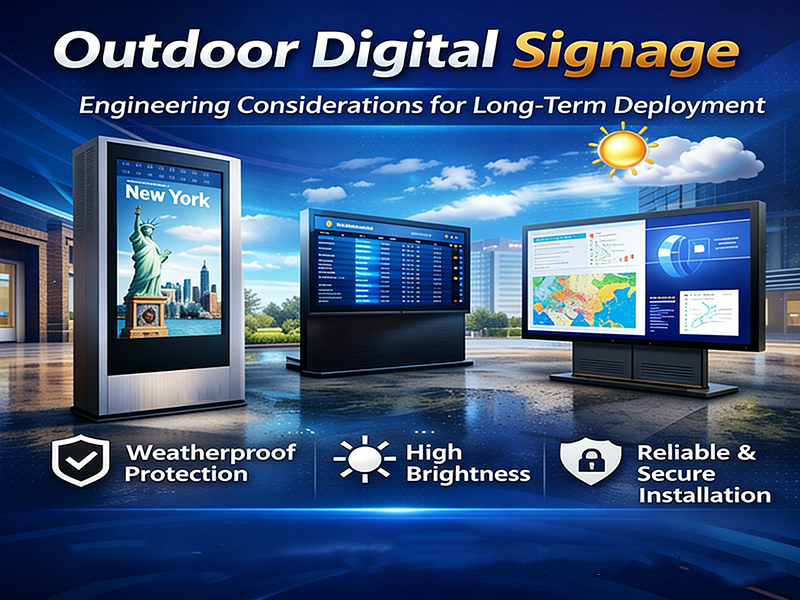
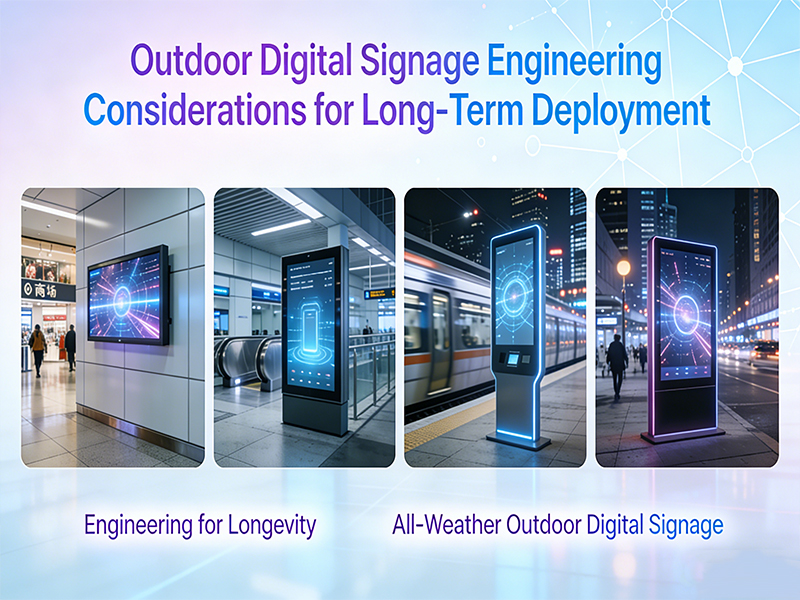
Outdoor digital signage has rapidly become a critical infrastructure component for modern cities, transportation hubs, retail districts, and public institutions. Unlike indoor displays, outdoor systems operate in unpredictable and often harsh environments where engineering quality directly determines long-term performance and return on investment. For enterprises, system integrators, and municipal planners, deploying outdoor digital signage is not simply about installing a screen—it is about designing a resilient communication platform capable of delivering reliable performance year after year.
One of the most fundamental engineering considerations is environmental protection. Outdoor displays must withstand rain, dust, humidity, and fluctuating temperatures without compromising internal electronics. High protection ratings such as IP65 or above are essential to prevent water ingress and dust accumulation, both of which can significantly shorten equipment lifespan. Beyond sealing, enclosure design must also account for structural durability, ensuring the housing resists corrosion, wind loads, and potential external impact. In high-traffic public areas, durability is not optional; it is foundational to operational continuity.
Sunlight readability is another defining factor that separates professional outdoor signage from standard commercial displays. Outdoor environments expose screens to direct sunlight for extended periods, which dramatically reduces visibility if brightness levels are insufficient. High-brightness panels—often exceeding 2000 nits—are required to maintain clear, vibrant content throughout the day. Anti-glare glass treatments and high contrast ratios further enhance legibility, ensuring that advertisements, public announcements, or wayfinding information remain visible even under intense lighting conditions. Without proper brightness engineering, even the most visually compelling content loses effectiveness.
Thermal management plays a crucial role in long-term deployment stability. Outdoor screens must function in extreme heat during summer and potentially freezing temperatures in winter. Integrated cooling systems, heat dissipation structures, and temperature control modules help regulate internal conditions and prevent overheating or condensation damage. In colder climates, heating elements may be necessary to ensure startup reliability and consistent performance. Displays designed for continuous 24/7 operation require carefully engineered airflow and thermal balancing systems to maintain stable internal components over time.
Security and vandal resistance also demand attention in public installations. Outdoor digital signage is often positioned in open-access environments, making it vulnerable to physical damage or tampering. Reinforced tempered glass, heavy-duty metal enclosures, and secure locking systems protect internal components from both accidental impact and intentional vandalism. In municipal or transportation projects, robust structural design enhances safety while reducing maintenance costs and operational interruptions.
Beyond hardware durability, successful outdoor deployment depends on reliable power and connectivity infrastructure. Stable electrical supply with surge protection safeguards equipment from voltage fluctuations, while network connectivity—whether through wired Ethernet, Wi-Fi, or 4G/5G modules—enables remote content updates and centralized management. Modern digital signage is increasingly part of smart city ecosystems, requiring seamless integration with content management systems to provide real-time updates, advertising scheduling, or emergency communication.
Mounting and structural engineering further determine deployment longevity. Outdoor signage installations must consider load-bearing requirements, wind resistance, and compliance with local engineering standards. Proper foundation work, cable management, and weather-resistant fixtures reduce long-term operational risks. In large-scale projects, professional engineering certification ensures both safety and regulatory compliance.
Maintenance planning is equally important in lifecycle cost management. Even the most durable outdoor display systems require periodic inspection and servicing to maintain seals, cooling systems, and electrical integrity. Designing signage enclosures with service accessibility simplifies component replacement and reduces field labor costs. Long-term deployment success depends not only on initial build quality but also on thoughtful maintenance strategies.
As a professional commercial display manufacturer, Hangzhou Gaoke Industry & Trade Co., Ltd. provides engineered outdoor digital signage solutions designed specifically for demanding environments. From high-brightness outdoor LCD displays to fully integrated outdoor advertising kiosks, Gaoke’s products are developed with durability, thermal control, and structural stability in mind. With experience serving global B2B clients, including system integrators and project contractors, the company delivers solutions suitable for transportation hubs, retail streets, government facilities, and smart city deployments.
Outdoor digital signage is a long-term investment that requires a strategic balance of hardware engineering, environmental protection, operational planning, and reliable manufacturing support. When these elements are properly aligned, outdoor displays become powerful communication assets capable of operating continuously while delivering measurable value. For organizations planning large-scale public deployments or commercial advertising networks, selecting the right engineering partner is as important as selecting the right display technology.

Hangzhou Gaoke Industry&trade Co., Ltd.


+8613706719639


A6 Cainiao Zhigu, Yuhang District, Hangzhou, Zhejiang, China




 中文
中文 English
 +86(571)89986945
 +8613706719639
 +8613706719639
 service@hz-gaoke.com
